

In the operating room, even the smallest details matter. Surgical lights are one of those details that can make all the difference between success and complications.
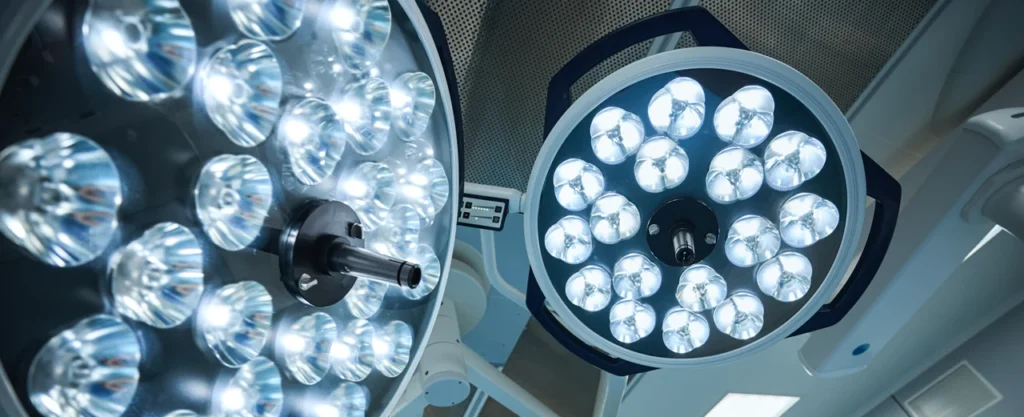
These lights provide bright, focused illumination that minimizes shadows, allowing surgeons to clearly visualize anatomical structures and tissues. This article highlights the importance of surgical lights and how they support precision in the operating room.
Why Are Surgical Lights Important in the Operating Room?
According to Axel Merseburger, professor of urology working at the university hospital Schleswig-Holstein “A well-designed and properly positioned surgical light can enhance the surgery and provide more safety for the team and therefore also for the patient”. Here is why surgical lights are important in the operating room.
Better Visibility and Precision
- Precision in Surgical Procedures: Surgical procedures demand absolute precision, where visibility is important for accuracy.
- High-Intensity Illumination: Modern surgical lights provide high-intensity lighting to ensure clear visibility of the operating field, even for the smallest details.
- Critical for Surgical Tasks: Proper lighting helps distinguish tissue layers, identify blood vessels, and perform intricate procedures without errors.
- Adjustable Light Control: Surgeons can control light intensity and focus, helping them to adjust the lighting to the specific task and ensure optimal visibility.
- Insufficient lighting can lead to errors, making it difficult to see important structures.
Improved Patient Safety
- Patient safety is the top priority in surgery, and surgical lights play a crucial role in minimizing risks.
- Well-designed lighting systems provide consistent and reliable illumination.
- Proper lighting reduces complications by ensuring all parts of the body are adequately lit which:
- Minimizes risk of incorrect incisions.
- Helps avoid working on the wrong tissue.
- Reduces the chance of missing complications like bleeding.
- Optimal lighting reduces stress on surgical teams, helping them to focus on the procedure.
- Maintaining proper visibility helps surgical teams stay focused and concentrated, ensuring patient safety during the operation.
How Surgical Lights Support Long Procedures
Surgical procedures can last for several hours, making ergonomic lighting essential for the comfort of both surgeons and staff.
- Adjustable brightness and positioning allow for optimal lighting throughout the procedure.
- Ergonomic designs reduce eye strain and surgeon fatigue.
- Consistent lighting throughout the procedure minimizes distractions and improves accuracy.
- Cool LED lighting prevents overheating, ensuring comfort for both patients and surgeons.
What Features Make Modern Surgical Lights Stand Out
Brightness and Adjustable Intensity
Not all surgeries require the same lighting conditions. Modern surgical lights offer:
- High-intensity lighting for complex surgeries like neurosurgery.
- Diffused lighting for procedures that require softer illumination.
- Adjustable brightness control for customized visibility.
Shadow Reduction Technology
- Multiple light sources prevent shadows, ensuring uninterrupted visibility.
- Advanced optical systems adjust light positioning to eliminate dark spots.
Energy Efficiency and Heat Control
- LED surgical lights use less energy, making them cost-effective.
- They generate minimal heat, reducing discomfort during long surgeries.
- Hospitals switching to LED lights save up to 60% on energy costs.
Durability and Long Lifespan
- High-quality surgical lights last longer, reducing maintenance costs.
- They withstand daily use and cleaning, ensuring a smooth workflow in operating rooms.
Benefits of High-Quality Surgical Lights
1. Improved Visibility and Precision
- Bright, Clear Illumination: High-quality surgical lights ensure the surgical field is brightly illuminated, which helps surgeons see the area clearly, even in deep or difficult-to-reach tissues. This enhances precision and reduces the likelihood of errors during procedures.
- Adjustable Intensity: Many advanced surgical lights allow for adjustable light intensity, ensuring that surgeons can adjust the lighting to suit the procedure’s needs. This is important in delicate surgeries where visibility is crucial.
2. Reduced Shadows
- Shadow-Free Lighting: High-quality lights are designed to minimize shadows, providing consistent and illumination. This is achieved through multiple light sources (e.g., LEDs or halogen bulbs) and advanced optical systems. This ensures that no area of the surgical site is obscured, which is critical for performing procedures accurately.
3. Improved Color Accuracy
- True Color Rendering: Premium surgical lights offer superior color rendering, which ensures that tissues and organs are seen in their natural colors.
- Prevents Misinterpretation: Color accuracy also reduces the risk of misinterpreting the surgical site due to improper lighting conditions.
4. Reduced Eye Fatigue
- Low Heat Emission: High-quality surgical lights, especially LED models, emit much less heat compared to traditional halogen lights. This reduces eye fatigue for both the surgeon and staff.
- Longer Operation Time: Reduced heat generation also makes it possible to perform longer surgeries without compromising comfort.
5. Energy Efficiency and Cost Savings
- Energy-Efficient LED Technology: Modern surgical lights, especially LED models, use significantly less energy compared to older halogen lights. This reduces electricity costs and the frequency of bulb replacements, leading to significant long-term savings for healthcare facilities.
- Long Lifespan: LED surgical lights have a much longer lifespan compared to traditional lighting, further reducing maintenance costs.
6. Ergonomics and Flexibility
- Adjustable Positions: High-quality surgical lights come with adjustable arms and positioning systems, allowing them to be easily positioned at various angles to illuminate the surgical site without obstructing the surgeon’s view.
- Flexible Control: Surgeons can quickly adjust the light’s intensity, color temperature, and position with minimal effort, ensuring they have full control over the lighting during the procedure.
7. Hygienic and Easy to Clean
- Smooth, Non-porous Surfaces: Many high-quality surgical lights feature smooth, easy-to-clean surfaces, which help prevent the buildup of bacteria and other contaminants. This is particularly important in sterile environments like operating rooms.
- Higher Sterility: Some surgical lights are designed with antimicrobial coatings or features that reduce the risk of infection.
8. Improved Surgical Team Performance
- Clearer Communication: With better lighting and visibility, the surgical team can communicate more effectively and perform tasks more efficiently.
- Comfortable Working Conditions: Surgeons and staff benefit from a well-lit, comfortable working environment, which can reduce stress and improve focus.
9. Patient Safety
- Fewer Mistakes: With optimal lighting, the chances of surgical errors are reduced, ensuring a higher level of patient safety during the operation.
- More Accurate Surgical Outcomes: High-quality lighting helps ensure that the surgery is performed as precisely as possible, which can improve overall outcomes and recovery times for patients.
Common Mistakes to Avoid When Choosing Surgical Lights
Ignoring Energy Efficiency
Don’t – Choosing non-efficient lights leads to higher electricity costs and excessive heat.
Do’s – LED surgical lights reduce operational costs while improving safety and comfort.
Overlooking Ergonomics
Don’t – Poorly designed lighting can cause eye strain, discomfort, and fatigue.
Do’s – Ergonomic lighting with adjustable brightness helps prevent fatigue and improves focus.
- Not Considering Room-Specific Needs
Don’t – Using the wrong type of surgical light can make procedures harder.
Do’s – Lighting should be selected based on room size, layout, and surgical needs.
Conclusion: Why Good Lighting Matters in Surgery
Surgical lights do more than just brighten the room, they:
- Improve visibility, precision, and color accuracy.
- Reduce eye strain, keeping surgical teams focused and alert.
- Prevent errors and improve patient safety.
- Save hospitals money by reducing energy costs and maintenance needs.
Hospitals must choose high-quality, energy-efficient surgical lights to ensure the safety and efficiency of their operating rooms.
Explore the range of advanced surgical lights designed for precision, comfort, and efficiency, and ensure your operating room is equipped with premium lighting solutions from a trusted medical equipment supplier.